Where We Work › Hawaiian Islands › Maui Nui
West Maui
Credit: Amity Mason
West Maui’s Coral Reefs
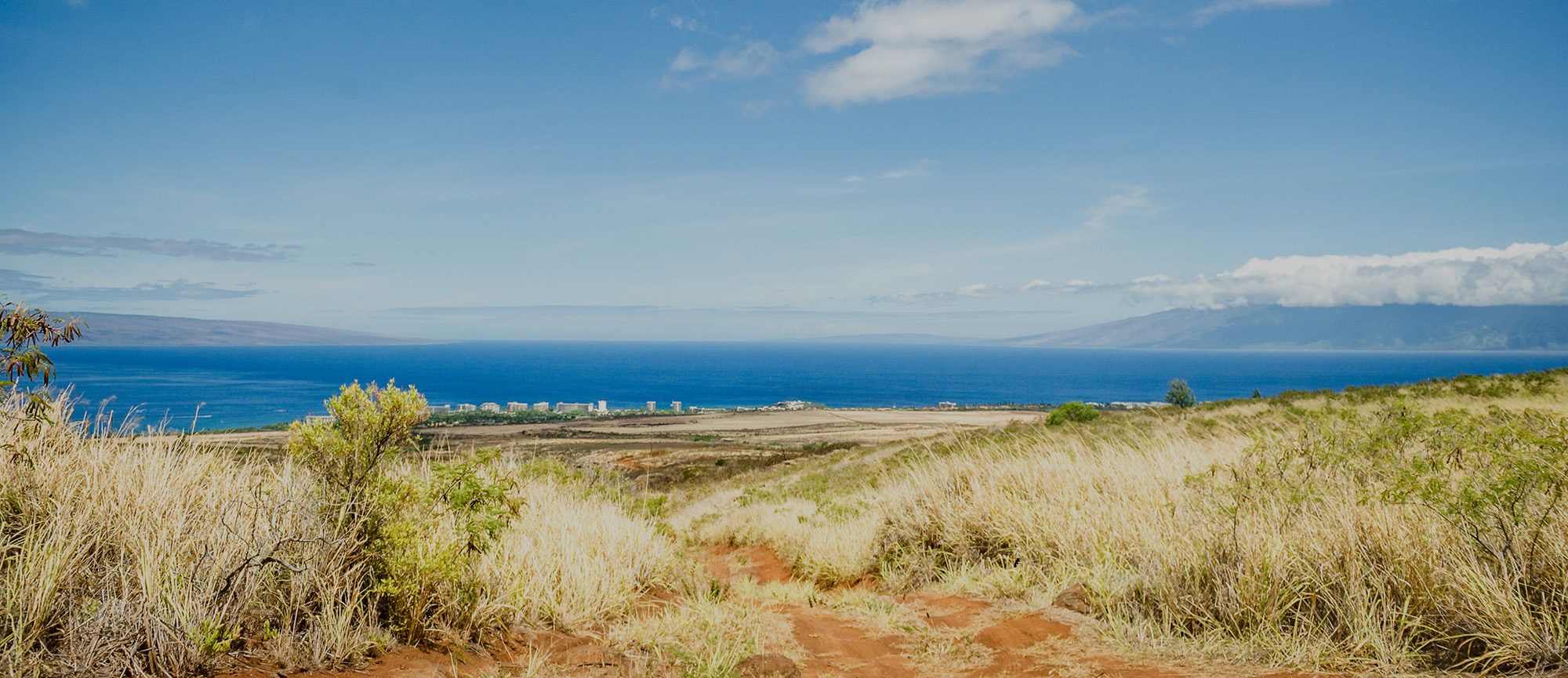
West Maui’s coral reefs are important sources of coral larvae that replenish reefs across Maui, Lana‘i, Moloka‘i, and Kaho‘olawe. Because of this, the area has been designated a priority conservation site by the U.S. Coral Reef Task Force and the Hawai‘i Department of Land and Natural Resources.
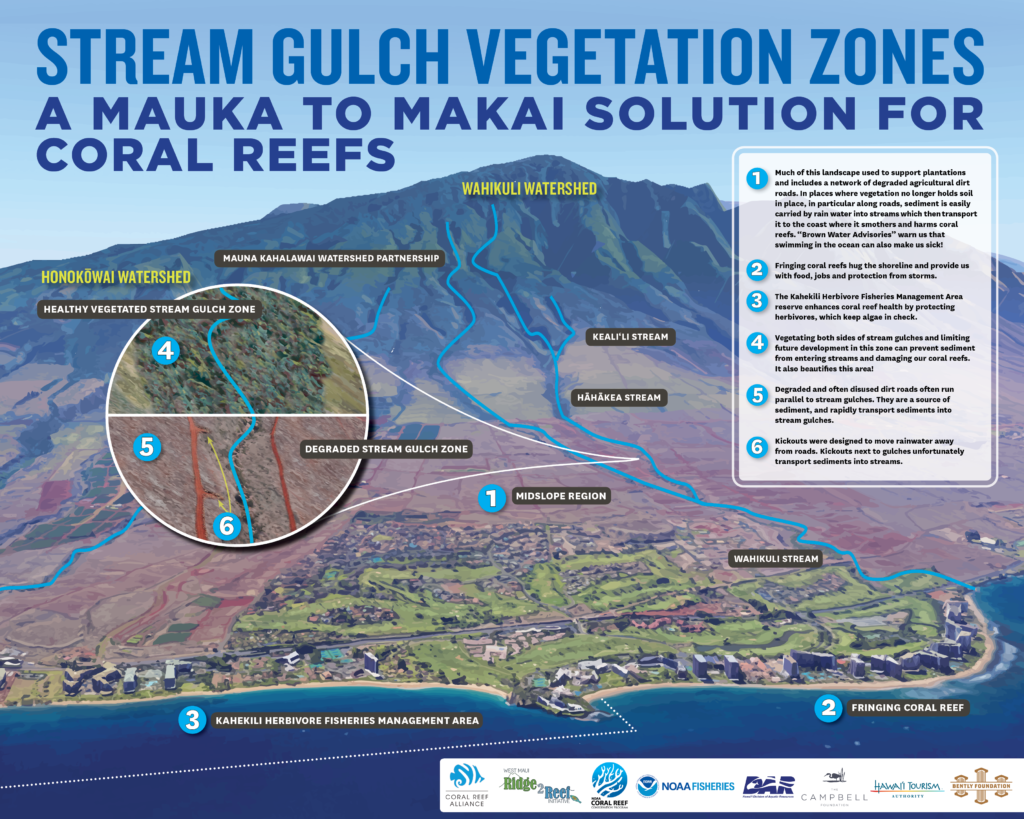
But West Maui is laden with historic sugarcane and pineapple plantations that are now out-of-use. During heavy rain events, the soil from these degraded landscapes travels down old dirt roads, enters stream gulches, and ultimately reaches the ocean where it smothers coral reefs.
Stormwater runoff is considered a major source of water pollution and has led to a 25-50% decline in Maui’s coral cover in the last fifteen years. It also regularly causes the Hawaiʻi Department of Health to issue “Brown Water Advisories”, which are warnings to the public to avoid swimming or fishing because of risks to human health.
Our Work
Our mauka to makai (ridge-to-reef) approach restores the natural function of an ahupua’a (watershed), so that chemicals, nutrients, and sediment are naturally removed from stormwater before they reach the ocean.
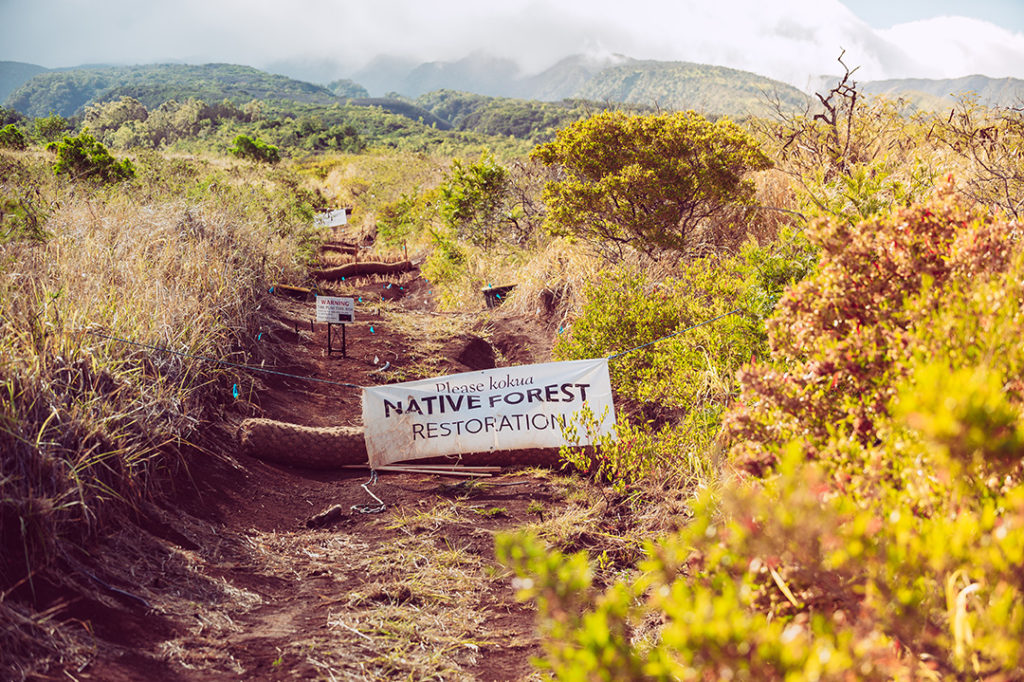
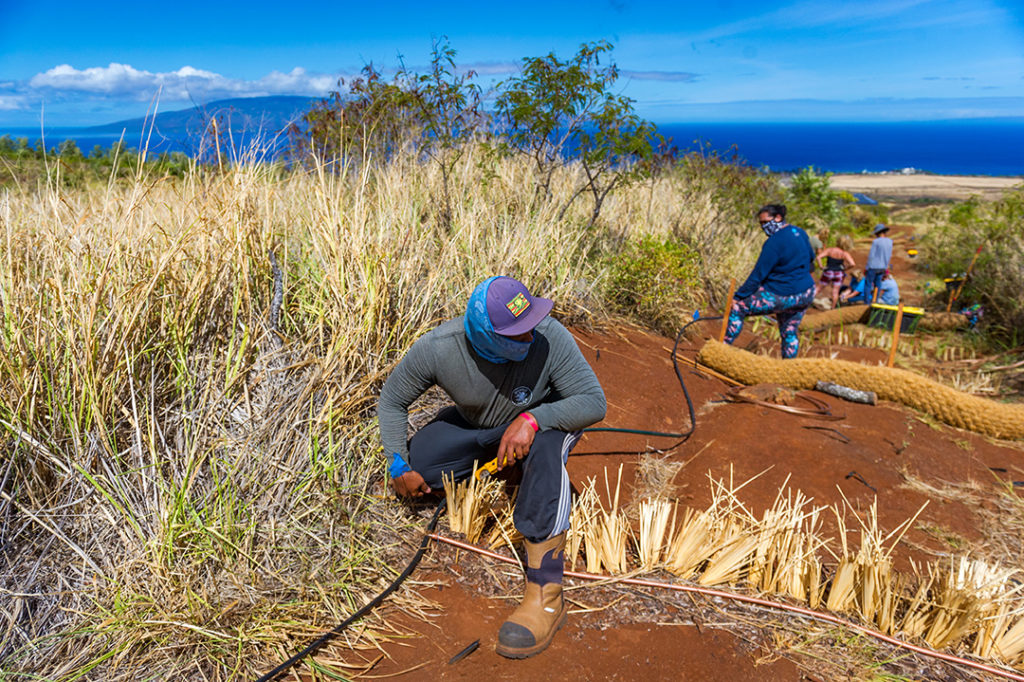
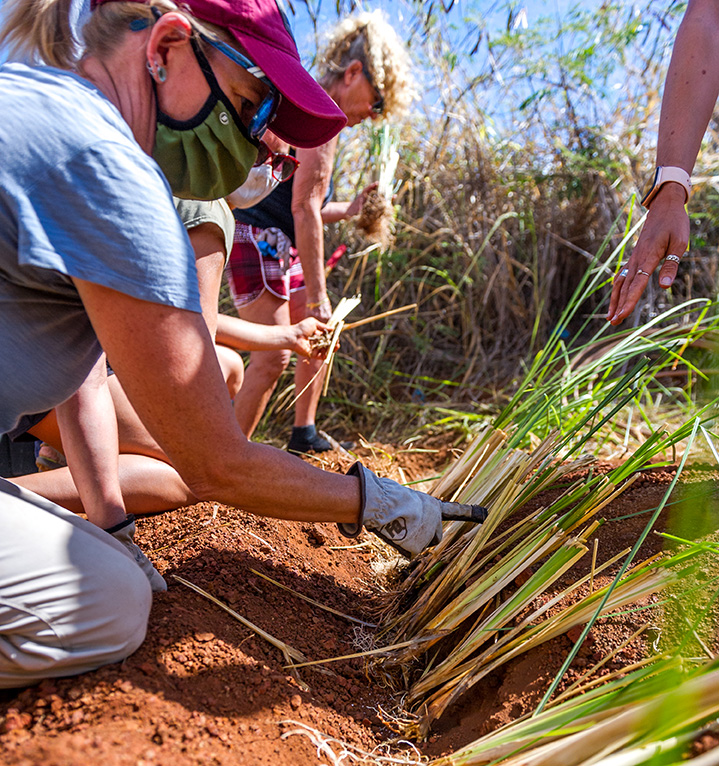
Toward the top of the mountain and in the midslope region, we use native plants—and over 100 supportive volunteers—to restore the degraded landscapes and trap the sediment before it has a chance to runoff into the ocean. We’re restoring the mauka (mountainside) with native plants like pili grass and natural materials like coconut coirs to slow the runoff, trap the sediment, and absorb the nutrients.
On the coast, we work with resort property owners, the tourism industry, and Maui County to implement reef-friendly Low Impact Design (LID) landscaping that serves as a last-ditch effort to filter stormwater before it reaches the ocean. Looking for more details?
Get Involved
Volunteer
We’re always looking for local volunteers to help us grow native plants and reforest the mountainside. Volunteers grow native plants from seed at their homes. And once a month, we have a volunteer planting day where volunteers transplant native plants into the ground at our restoration site. Interested? Sign up by completing our volunteer interest form, and a member of our team will contact you shortly. Before volunteering at our field site, you will also need to complete the volunteer waiver.
Become a Citizen Scientist
Through our partner organization, Hui O Ka Wai Ola, volunteers collect water quality samples around the island to improve our understanding of Maui’s coastal areas and threats to coral reefs. Visit the Hui O Ka Wai Ola website to become a water quality sampler.
Recent News
-
Plant a Tree, Save a Coral
Jen Vander Veur is fighting an uphill battle to save coral reefs on the slopes of West Maui’s mountains. Jen is CORAL’s Program Manager in Maui, and she’s leading the charge on restoring Maui’s once lush forest to stabilize the soil and protect coral reefs downstream from being smothered by sediment, reversing the effects of
-
Motorcyclists Become Unexpected Allies in Protecting Maui’s Reefs
If you walk along a certain dirt road in the Wahikuli watershed in West Maui, you will see a large sign made by the Coral Reef Alliance asking bikers for their kokua (help) in avoiding this road and taking an alternative road nearby instead. What does this road a mile from the shoreline have to
-
CORAL’s Partnership in West Maui
CORAL is excited to announce a new partnership with Skye Instruments, LLC to benefit our Clean Water for Reefs Initiative in Maui. Earlier this month, our team installed two weather stations in the Honokōwai and Wahikuli watersheds. Skye Instruments generously donated a weather station for each of the watersheds we are currently working on restoring in the
-
Coral Reef Alliance Partners with PangeaSeed Foundation
For Immediate Release Friday, February 8th, 2019 Coral Reef Alliance partners with PangeaSeed Foundation and Wooden Wave artists to create a mural in Maui of our Clean Water for Reefs initiative West Maui, Hawaiʻi– The Coral Reef Alliance (CORAL) is excited to share the news of the completion of a mural in Maui that shows
-
Highlighting a Local Hero in West Maui
The volunteers of the Coral Reef Alliance (CORAL) play an important role in ensuring the success of the Clean Water for Reefs Initiative in West Maui. Their hard work and dedication helps CORAL achieve our mission of uniting communities to save coral reefs. Among this stellar network of volunteers, Charley Dofa stands out as an
-
CORAL’s Innovative Approach to Resolving Stormwater Issues in Maui
In a natural landscape, trees and soil help soak up rainwater, but in developed or urban landscapes, rainwater falls onto streets, parking lots, roofs, or other non-absorbent surfaces like concrete and asphalt. Instead of sinking into the ground, rainwater runs off the land, picking up harmful pollutants like nutrients, pesticides, petroleum residues, and sediments along
-
Maui Students Learn to Protect Their Watershed
Going back to school is always hard. Back to homework, waking up early and sitting in a classroom all day. But imagine going back to school and learning about real local issues, and then learning real life skills and using them to solve actual problems in your community. That’s what students in Mr. Ryan Duffy’s
-
A New Bike Path for Maui?
Aloha, I’m CORAL’s newest addition based in Hawaiʻi. As a native Hawaiian, my passion for protecting our natural environment is a deep part of who I am. I was born and raised on Oahu, and growing up spent my summers surfing with my dad, paddling canoe with my sister, and working in the Lo’i (taro
-
Putting the LID on stormwater runoff
From a conservation point of view, we don’t often think of coral reefs going hand in hand with construction and development. But they do—coral reefs attract tourists, and with tourism comes infrastructure. Coral reefs also provide benefits to communities, and people tend to concentrate in areas where they can reap those benefits. Over the years
-
New Course Teaches Reef-Friendly Shoreline Innovations
For Immediate Release March 16, 2015 MAUI, HAWAI’I–The Coral Reef Alliance (CORAL) is partnering with the Sustainable Living Institute of Maui to bring a new course to the University of Hawai‘i Maui College’s spring schedule. The 5-week class, Reef-Friendly Shoreline Innovations, is designed to teach watershed stewardship and landscape design principles to shoreline property owners


Resources
-
Building a Wash Down Station That Protects the Ocean
Wash down stations are dedicated areas for washing or rinsing that carries wastewater to the municipal sewer system instead of the ocean. Use this case study to learn how Slappy…
-
Restoring Watershed and Coral Reef Health in Hawai’i by Reducing Sediment Transport from Dirt Roads Into Streams
Designed for road maintenance crews and land managers, this guide outlines some of the best options for retrofitting a dirt road and simultaneously protecting the marine environment. It sets forth…
-
Hawai’i Native Plant Guide
Native plant vegetation along stream gulches is crucial to prevent sediment from fallow agricultural fields and dirt roads from washing down in stormwater and building up on Hawai’i’s coral reefs.…
-
Stormwater Treatment the Natural Way
Low Impact Design (LID) and Development is an environmentally-friendly approach to managing stormwater and protecting Hawai‘i’s coral reefs. This overview is intended to provide a practical introduction to LID principles and describe their specific…