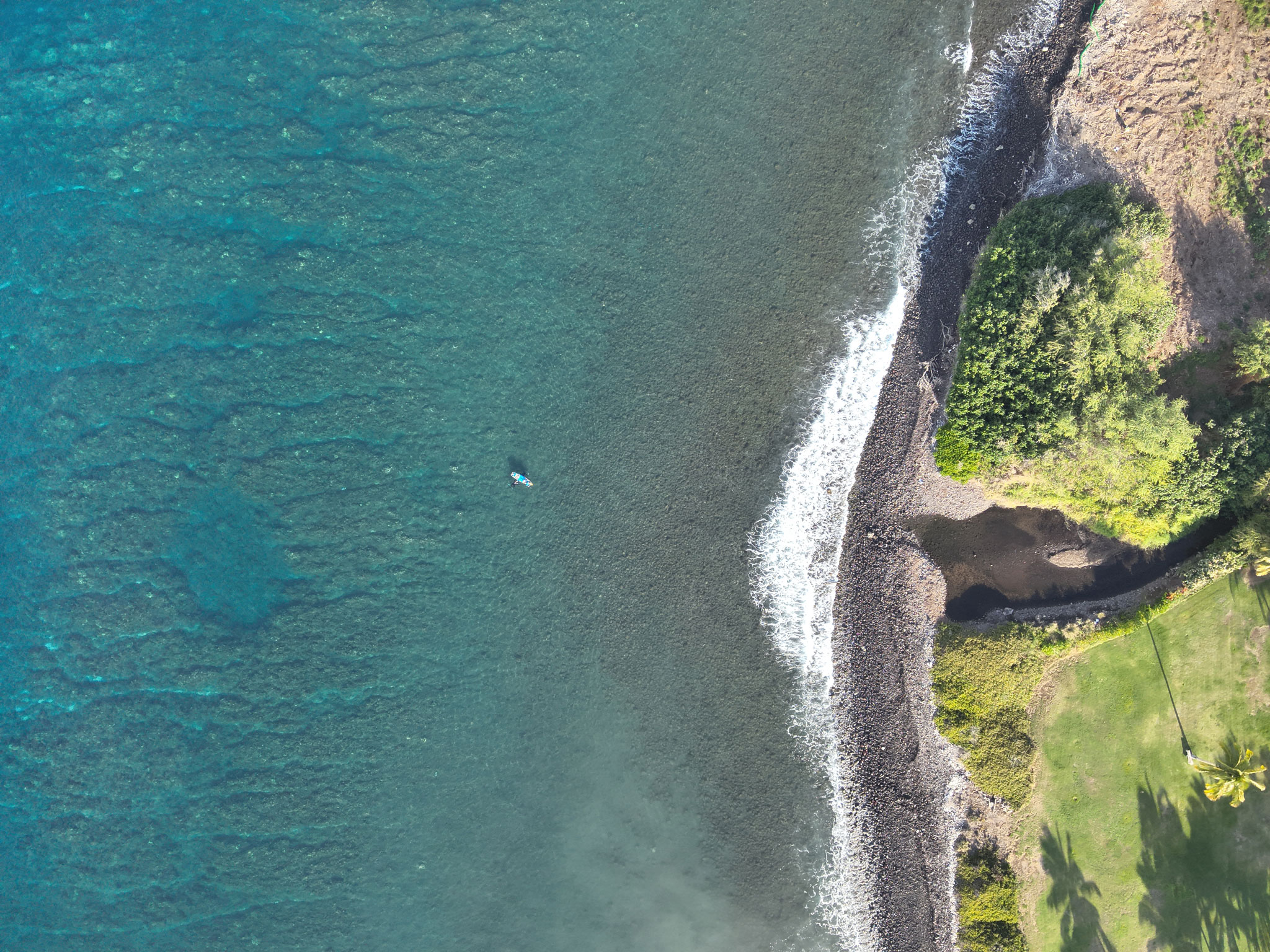
Over the past year, we helped transform science into impact, growing research and relationships into measurable, on-the-ground impact.
Across Maui Nui, the health of coral reefs begins far upstream. What happens on land—how water moves through wetlands and lo‘i, how coastlines are stewarded and managed, and how communities cherish their resources—directly shapes what reaches the ocean. That’s why our work focuses on the full watershed-to-reef connection, pairing science aligned with cultural foundations, restoration, and local leadership to reduce land-based pollution, strengthen native ecosystems, and create the conditions reefs need to adapt in a changing climate.
Building the Scientific Foundation for Culturally Grounded Conservation
Good decisions start with good data. Without understanding where sediment, nutrients, and pollutants enter the ocean, restoration efforts can miss the mark.
Over the past year, we advanced Coastal Zone Management projects by completing pre-restoration water-quality baselines with Kipuka Olowalu and Ka Honua Momona.
This work does more than collect numbers.
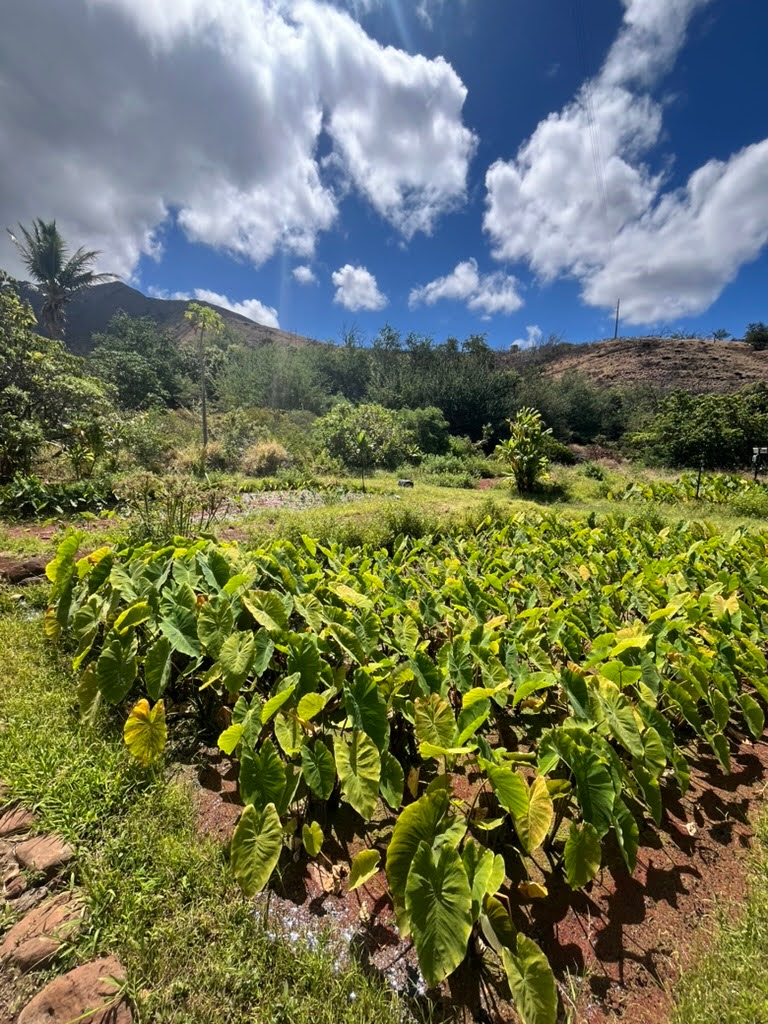
Our findings translate what communities have long known: Indigenous systems like loʻi kalo (taro fields) and loko iʻa (fishponds) function as powerful nature-based solutions. We’re working to gather evidence showing these systems not only strengthen local food security, but also slow runoff, trap sediment, improve water quality, and reduce stress on coral reefs before pollution reaches the ocean.
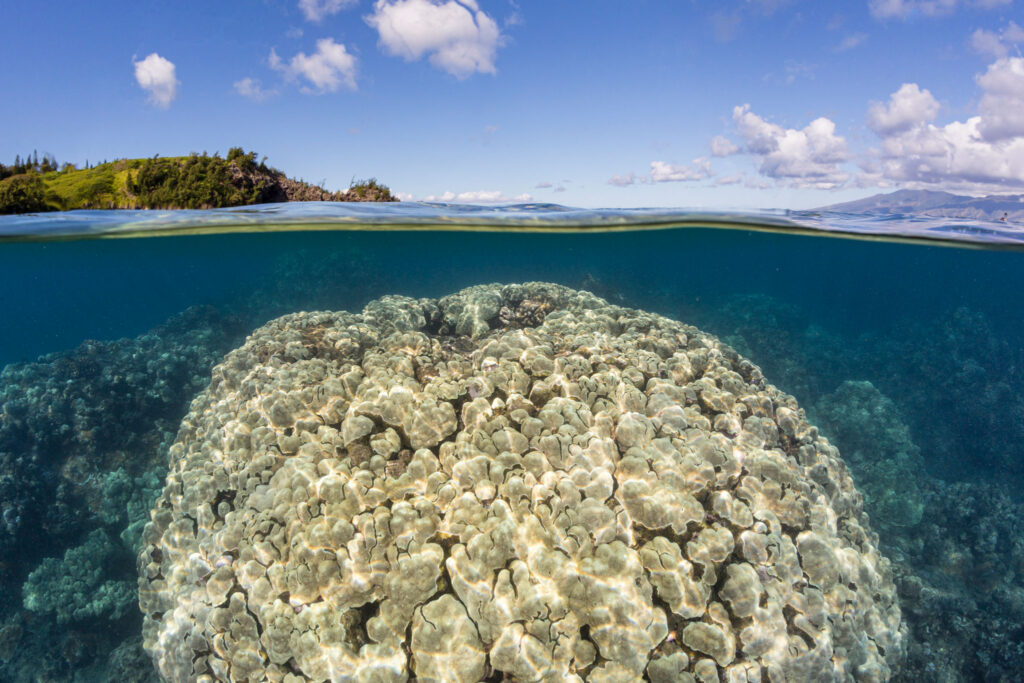
When sediment smothers corals or blocks sunlight, reefs struggle to grow and recover. By addressing these threats upstream, we give reefs a fighting chance.
Advancing Restoration on the Ground
Science informs action, but restoration happens in the field.
Across Moloka‘i and Maui, partners carried out our large-scale coastal habitat restoration to remove invasive species that choke waterways, destabilize shorelines, and degrade nearshore reefs.
This year’s progress included:
- Removal of 4+acres of invasive mangrove and 12,000+ lbs of invasive algae on Molokai‘i
- Clearing 10,000+ cubic feet of invasive vegetation in Olowalu
- Planting or seeding of 3,000+ native and canoe plants
[Read more in our 2025 Impact Report >]
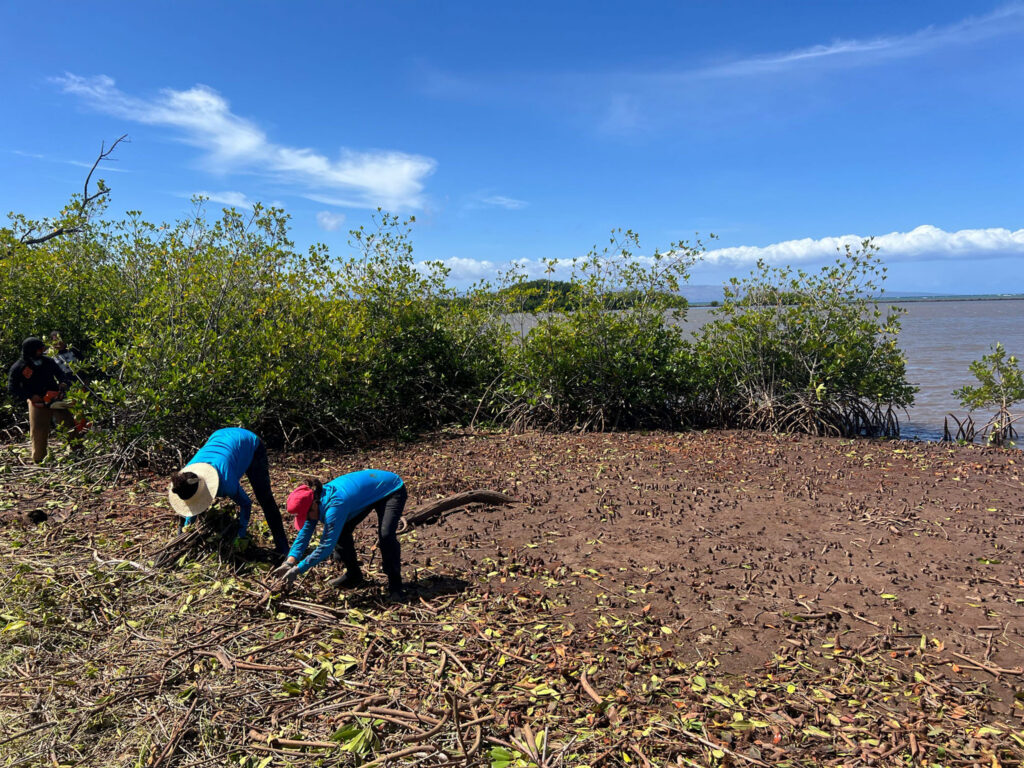
These actions restore native ecosystems and cultivate cultural practices that naturally filter runoff, stabilize soils, and buffer reefs from sediment and nutrient pollution. Securing critical state and federal permits also ensures restoration actions can continue efficiently and at scale.
Strengthening Partnerships and Community Leadership
Lasting conservation doesn’t come from the outside. It grows from community leadership.
In 2025, we invested deeply in relationships and shared stewardship by hosting learning exchanges, welcoming new partners, coordinating site visits and board retreats, and supporting local organizations with financial and grant management training. Subawardees received hands-on guidance from setup to execution, while community members helped shape navigation and stewardship decisions.
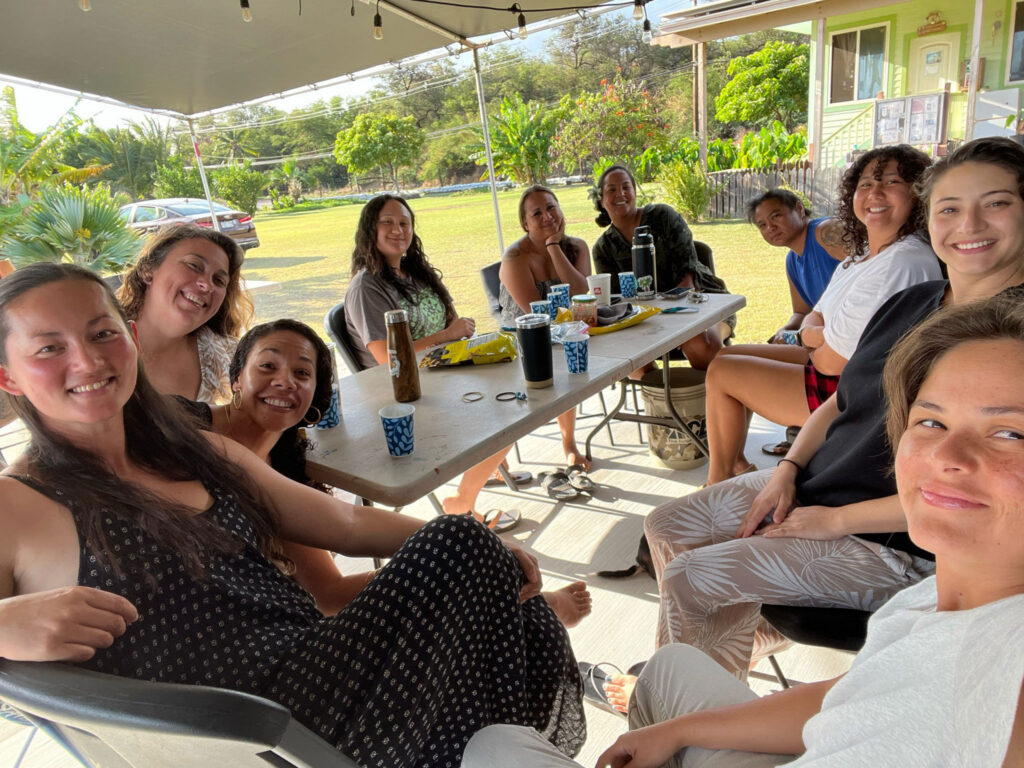
By earning trust, building transparency, and sharing autonomy, restoration becomes something communities lead.
Building Durable Infrastructure for Long-term Impact
Behind every successful program is strong infrastructure.
This year, we helped to install power and connectivity and convert partner spaces into functional offices, onboarded new staff and field crews, executed major contracts, finalized budgets, and launched coordinated communications and strategy.
These behind-the-scenes investments may not be visible on the shoreline, but they make long-term restoration possible—ensuring local teams have the tools, resources, and stability to keep this work going for generations.
Connecting Science, Indigenous Knowledge, and Education
Science is all about gathering data to improve choices on the ground (and underwater).
Strong conservation organizations track and contribute to peer-reviewed research, make plans from critical data, influence management plans, and drive evidence-driven policies.
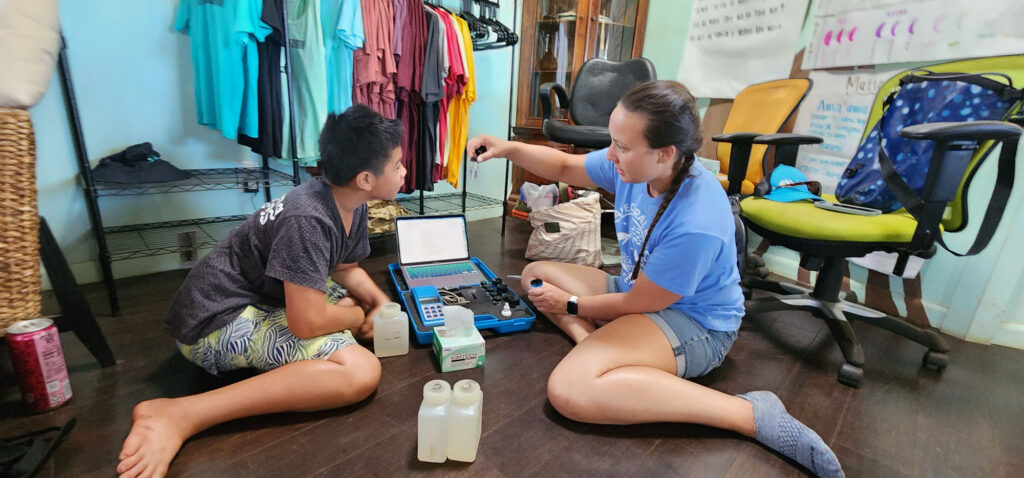
This approach builds pilina and kuleana—deeply connected relationships and mutual responsibility—while supporting healing, recognizing cultural knowledge, and nurturing the next generation of environmental leaders.
Why This Work Matters
Across Hawaiʻi, reefs are not separate from people—they are food systems, protection, history, and identity. For generations, Hawaiian communities have cared for these places through deep relationships with ʻāina (land) and kai (sea). Conservation doesn’t begin with a project plan; it grows from this enduring connection to place.
By improving water quality, restoring native ecosystems, supporting community-led stewardship, and grounding decisions in both science and indigenous knowledge, we reduce the everyday stressors that make Hawaiʻi’s reefs vulnerable. That gives reefs the space and resilience they need to survive in a changing world.
From mauka to makai, every action upstream protects what lies downstream.
