Where We Work › Hawaiian Islands › Maui Nui
West Maui
Credit: Amity Mason
West Maui’s Coral Reefs
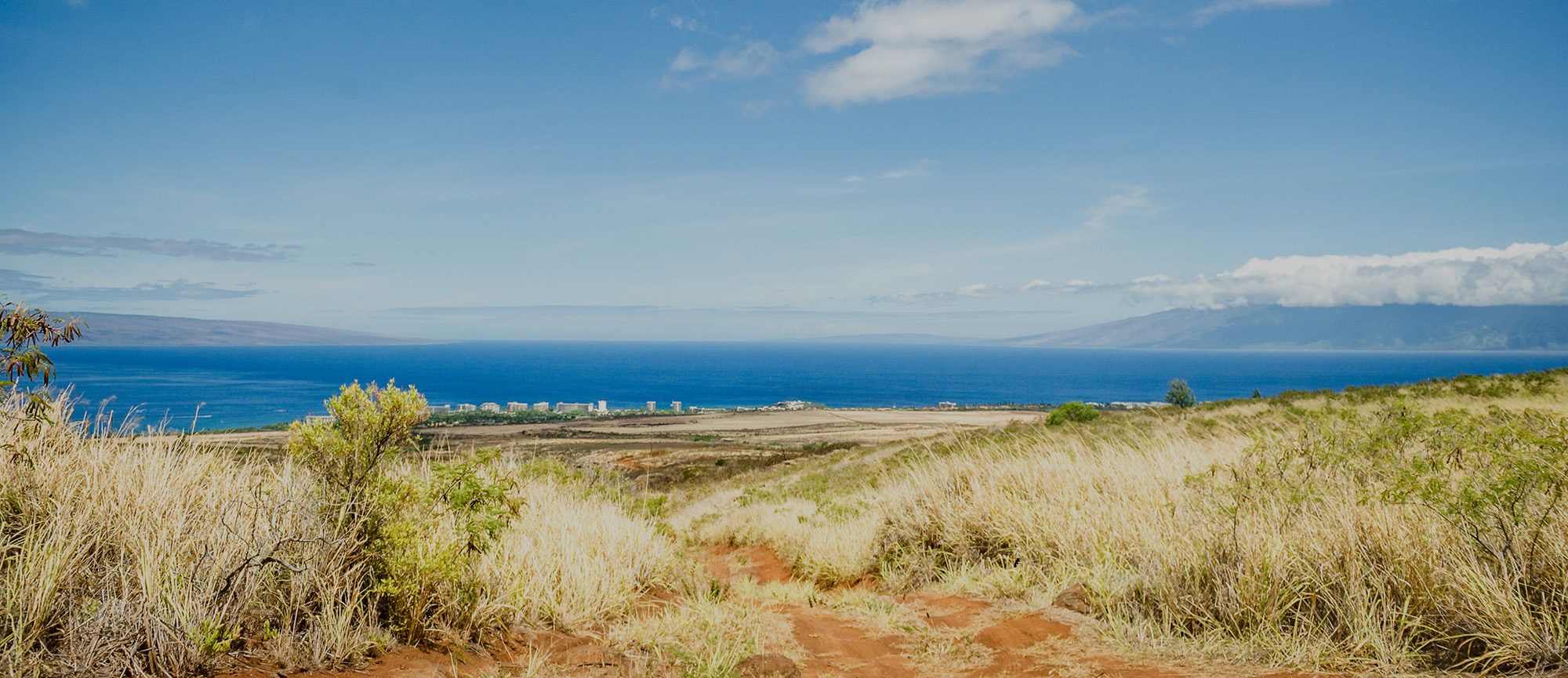
West Maui’s coral reefs are important sources of coral larvae that replenish reefs across Maui, Lana‘i, Moloka‘i, and Kaho‘olawe. Because of this, the area has been designated a priority conservation site by the U.S. Coral Reef Task Force and the Hawai‘i Department of Land and Natural Resources.
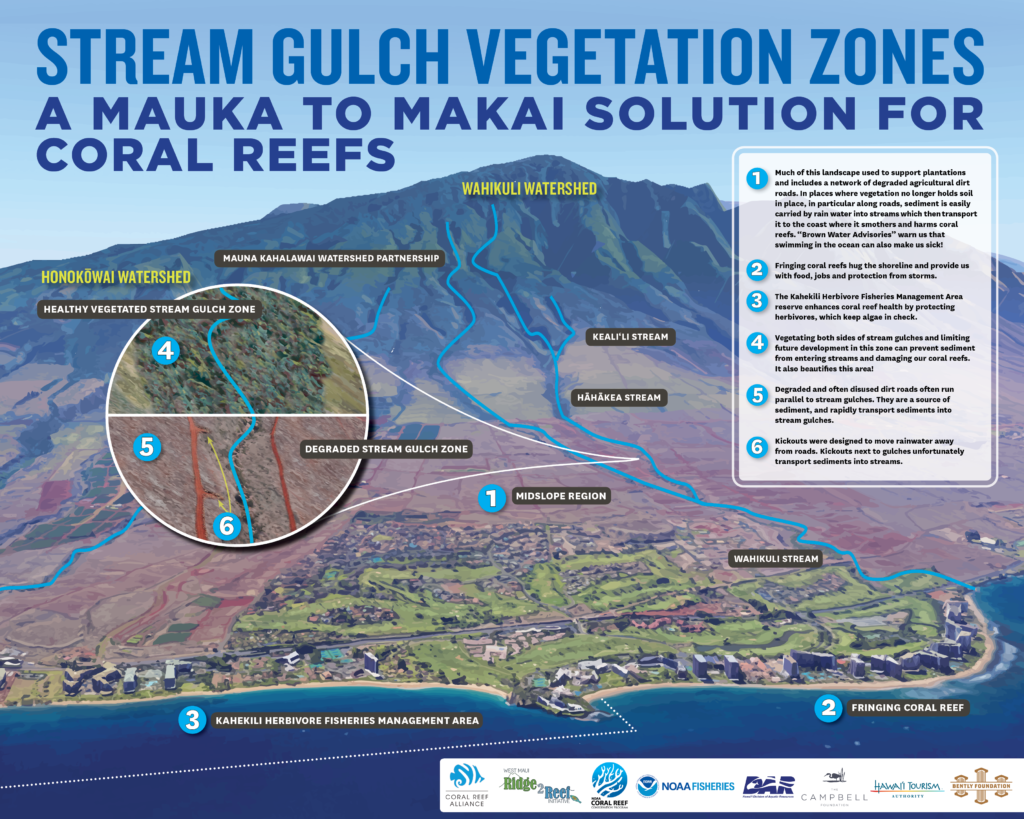
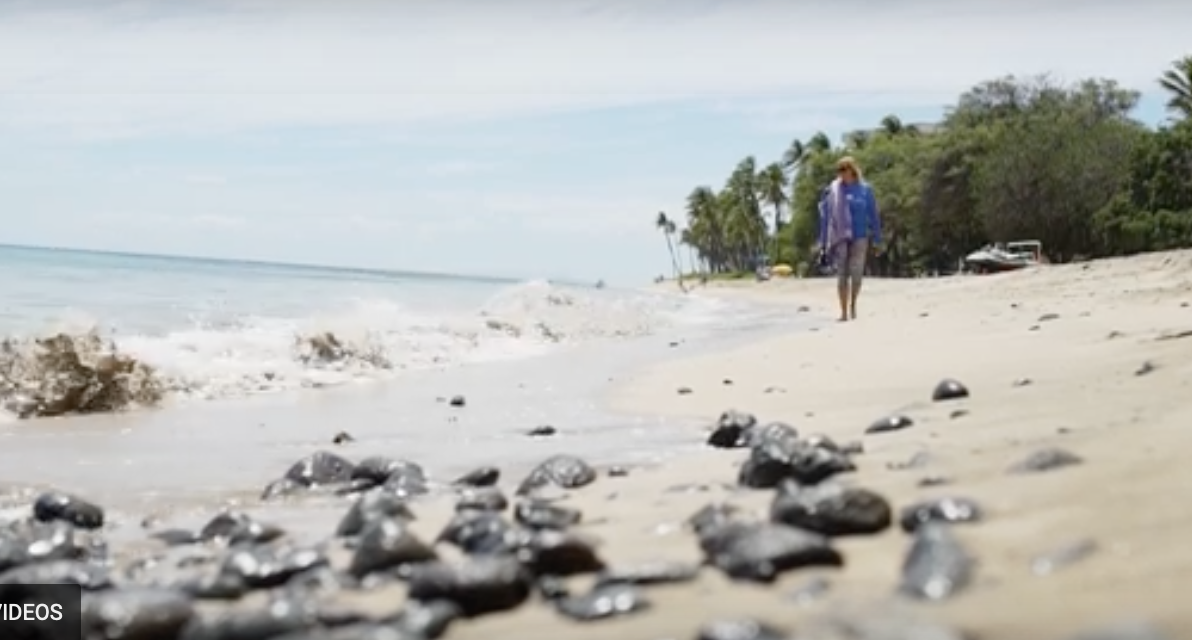
But West Maui is laden with historic sugarcane and pineapple plantations that are now out-of-use. During heavy rain events, the soil from these degraded landscapes travels down old dirt roads, enters stream gulches, and ultimately reaches the ocean where it smothers coral reefs.
Stormwater runoff is considered a major source of water pollution and has led to a 25-50% decline in Maui’s coral cover in the last fifteen years. It also regularly causes the Hawaiʻi Department of Health to issue “Brown Water Advisories”, which are warnings to the public to avoid swimming or fishing because of risks to human health.
Our Work
Our mauka to makai (ridge-to-reef) approach restores the natural function of an ahupua’a (watershed), so that chemicals, nutrients, and sediment are naturally removed from stormwater before they reach the ocean.
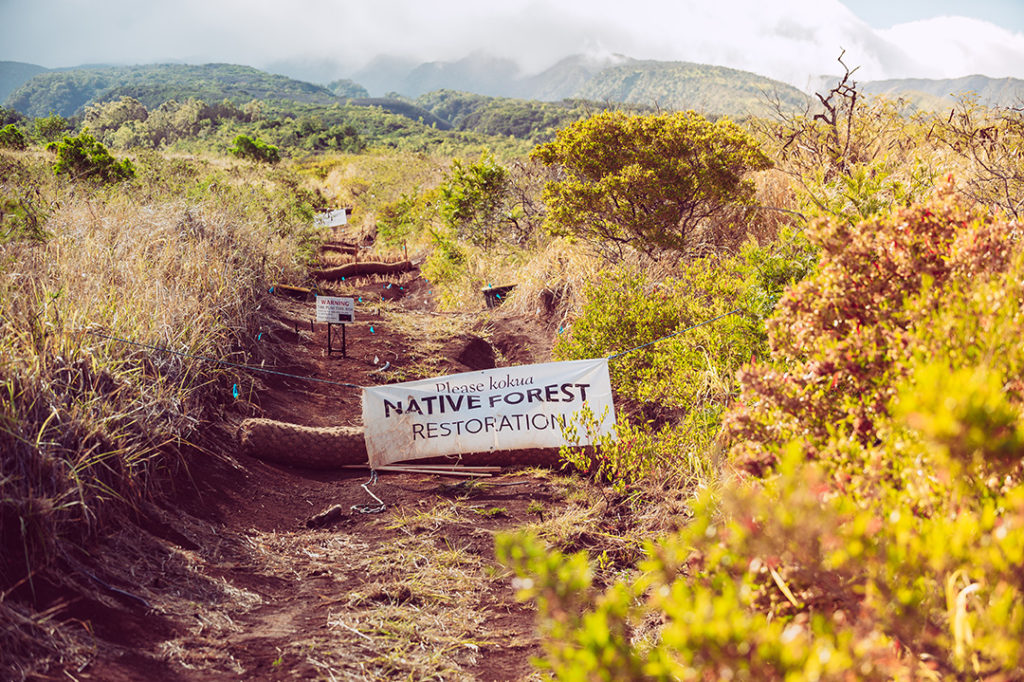
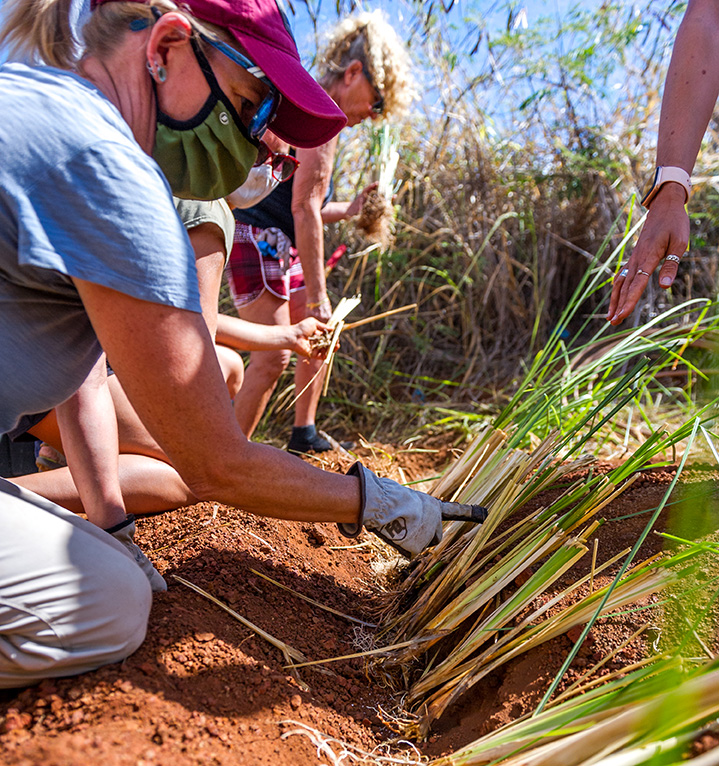
Toward the top of the mountain and in the midslope region, we use native plants—and over 100 supportive volunteers—to restore the degraded landscapes and trap the sediment before it has a chance to runoff into the ocean. We’re restoring the mauka (mountainside) with native plants like pili grass and natural materials like coconut coirs to slow the runoff, trap the sediment, and absorb the nutrients.
On the coast, we work with resort property owners, the tourism industry, and Maui County to implement reef-friendly Low Impact Design (LID) landscaping that serves as a last-ditch effort to filter stormwater before it reaches the ocean. Looking for more details?
Get Involved
Volunteer
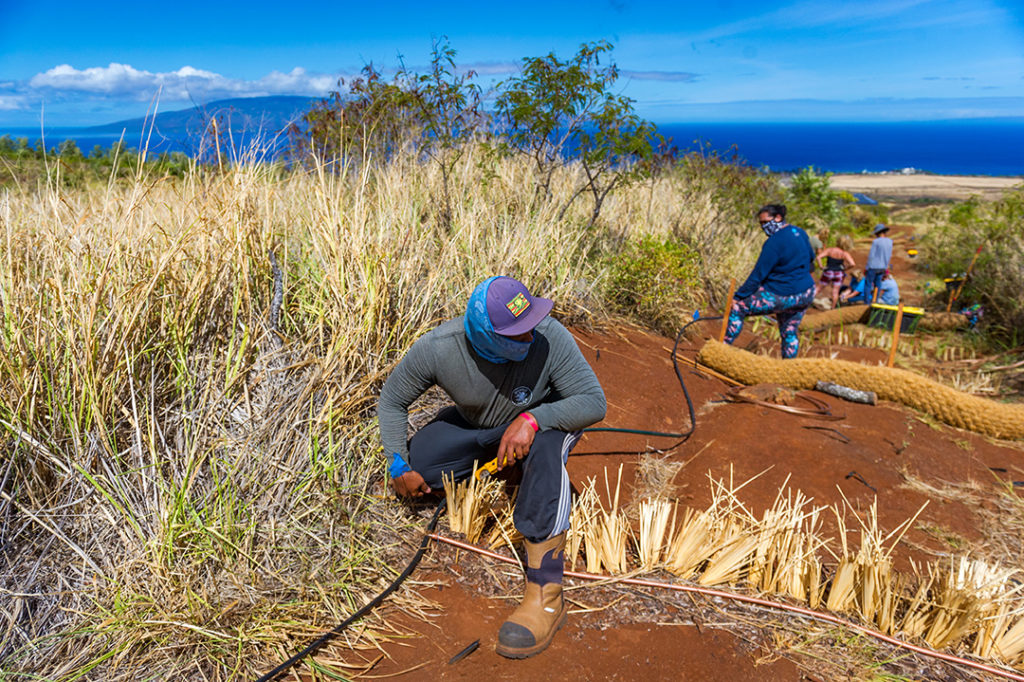
We’re always looking for local volunteers to help us grow native plants and reforest the mountainside. Volunteers grow native plants from seed at their homes. And once a month, we have a volunteer planting day where volunteers transplant native plants into the ground at our restoration site. Interested? Sign up by completing our volunteer interest form, and a member of our team will contact you shortly. Before volunteering at our field site, you will also need to complete the volunteer waiver.
Become a Citizen Scientist
Through our partner organization, Hui O Ka Wai Ola, volunteers collect water quality samples around the island to improve our understanding of Maui’s coastal areas and threats to coral reefs. Visit the Hui O Ka Wai Ola website to become a water quality sampler.
Recent News
-
CORAL is Selected as a Grantee of the Hawai‘i Community Foundation’s Marine 30×30 Pooled Fund
In recent weeks, CORAL was selected as a grantee for the Marine 30×30 Pooled Fund by the Hawai‘i Community Foundation, alongside five other community groups and nonprofit organizations in Maui, Hawai‘i. Together, we are working with the state, partners, and community members to restore Hawai‘i’s marine environments and contribute to the protection of 30 percent
-
Thank You for Supporting CORAL. Here’s How Your Gift Will Make an Impact in 2023
It’s 2023 and for us, that means a new year with new opportunities to continue protecting the world’s coral reefs. We are so grateful for each and every donor who continuously believes in our mission and stands up for the health of our ocean’s most vital ecosystems. Your generous gift will fund our regional programs
-
Advancing Maui’s Watershed Restoration Project
Updated May 2025 Maui’s coral ecosystems are some of the most vibrant and resilient in Hawai‘i — but they’re also facing immense pressure. Years of sediment runoff from historic agriculture continue to disrupt the delicate relationship between land and sea. That’s why, in Olowalu, we’re taking bold, community-led action. At the Coral Reef Alliance (CORAL),
-
Thank You for Supporting CORAL’s Volunteers in Maui
We are proud to support a dedicated team of local volunteers in Maui, Hawai’i, as they work to protect the valuable coral reefs in their community. By using “best management practices,” which are effective measures used to reduce marine pollution, we are able to minimize sediment pollution on coral reefs. Our volunteers grow and plant native
-
Using Native Plants to Protect Coral Reefs
In West Maui, Hawai‘i, CORAL’s Senior Program Manager Jennifer Vander Veur shares how our actions on land can impact what happens under the sea. Run-off sediment is threatening nearby coral reefs and making it harder for them to survive. To address this problem, Vander Veur leads our efforts to protect coral reefs by using native
-
CORAL Joins Maui Nui Makai Network
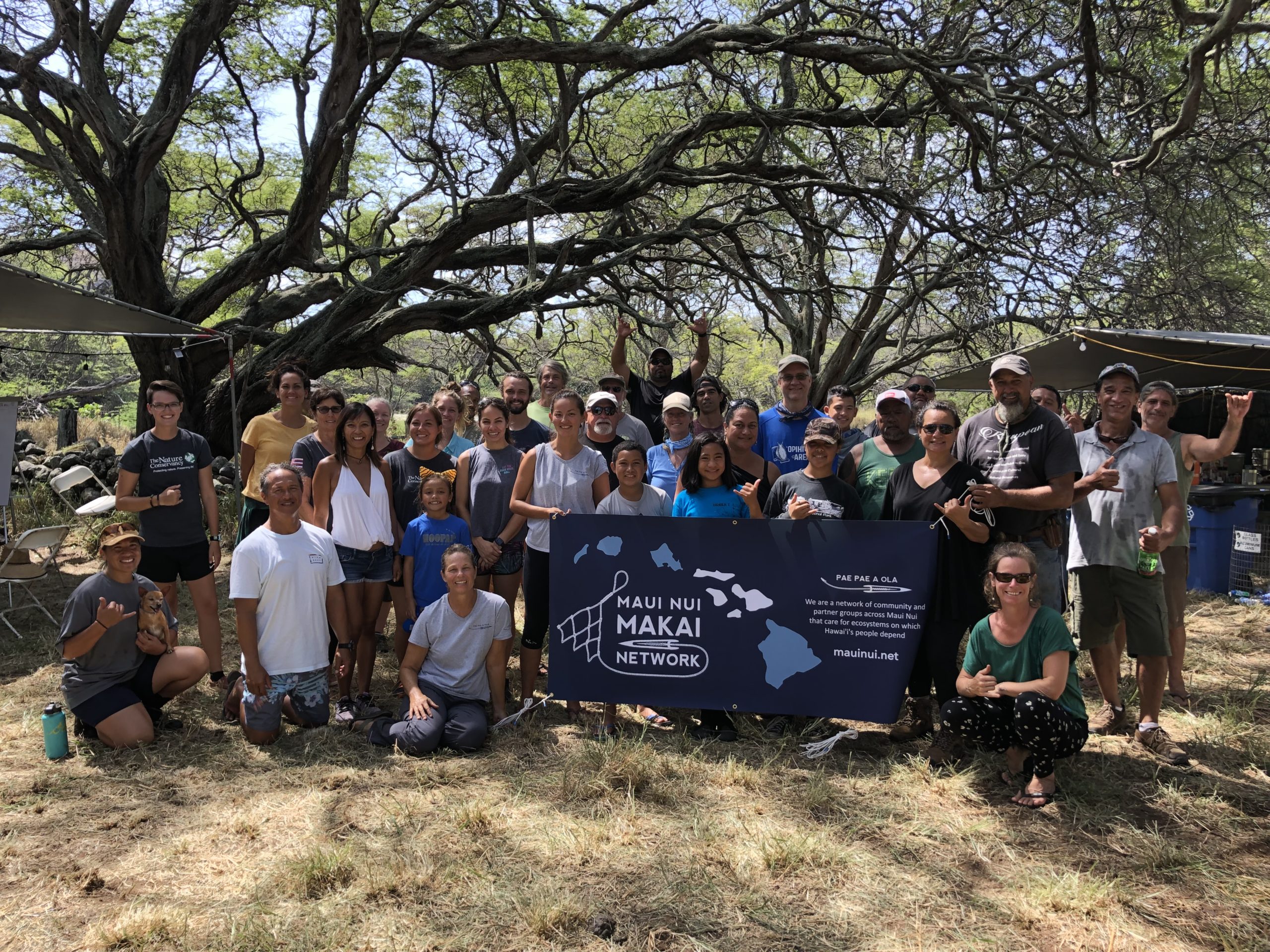
The Coral Reef Alliance (CORAL) is honored to join the Maui Nui Makai Network—a network of community groups from across Maui Nui that protect and care for marine and coastal ecosystems. The network was established in 2013 when community organizations decided they would be stronger working together than separately. Network members meet regularly to learn
-
Over 20 Tons of Sediment Prevented From Smothering Maui’s Coral Reefs
Over 20 tons of sediment has been captured in the mountains above Lahaina, the result of a collaborative restoration project led by the Coral Reef Alliance (CORAL). West Maui is laden with historic sugarcane and pineapple plantations that are now out-of-use. During heavy rain events, the potentially contaminated soil from these degraded landscapes travels down
-
Talking Story About Maui’s Coral Reefs
Last month, we were honored to be selected by the National Fish and Wildlife Foundation (NFWF) as a recipient of the Coral Reef Conservation Fund grant, our second in as many years. The grant supports our restoration projects in West Maui, Hawai‘i where we’re planting native plants along stream banks and degraded agricultural lands to
-
Maui 10-Year-Old Grows 900 Native Plants to Protect Coral Reefs
10-year-old Abby Rogers has converted her backyard into a native plant nursery to help save coral reefs. Rogers is a volunteer with the Coral Reef Alliance (CORAL), helping to grow native plants that will be transplanted at their stream restoration site in Wahikuli. The native plants trap sediment that runs off the slope and into
-
Maui 10-Year-Old Grows 900 Native Plants to Protect Coral Reefs
For Immediate Release Thursday, October 1, 2020 Maui, Hawai’i – 10-year-old Abby Rogers has converted her backyard into a native plant nursery to help save coral reefs. Rogers is a volunteer with the Coral Reef Alliance (CORAL), helping to grow native plants that will be transplanted at their stream restoration site in Wahikuli. The native




Resources
-
Installing a Bioretention Area
A bioretention area is an effective and affordable low impact design (LID) practice to prevent pollutants from reaching our streams and the ocean. This case study showcases how the Maui…
-
What is Runoff and How Does it Affect Coral Reefs?
Eventually stormwater ends up in our oceans—either by traveling down storm drains, or by flowing into waterways like rivers and streams that lead to the ocean. When polluted stormwater flows…
-
Converting Wet Retention Ponds to Floating Treatment Wetlands
A floating treatment wetland (FTW) is a valuable retrofit to improve the pollution treatment effectiveness of a wet retention pond. Learn how the Kaʻanapali Golf Resort in West Maui, Hawai’i…
-
Using a Rain Garden to Filter Stormwater
Learn how the Maui Economic Opportunity (MEO) Demonstration Farm installed a rain garden to showcase native plants, collect rain water and supplement irrigation, filter stormwater before it reaches the ocean,…