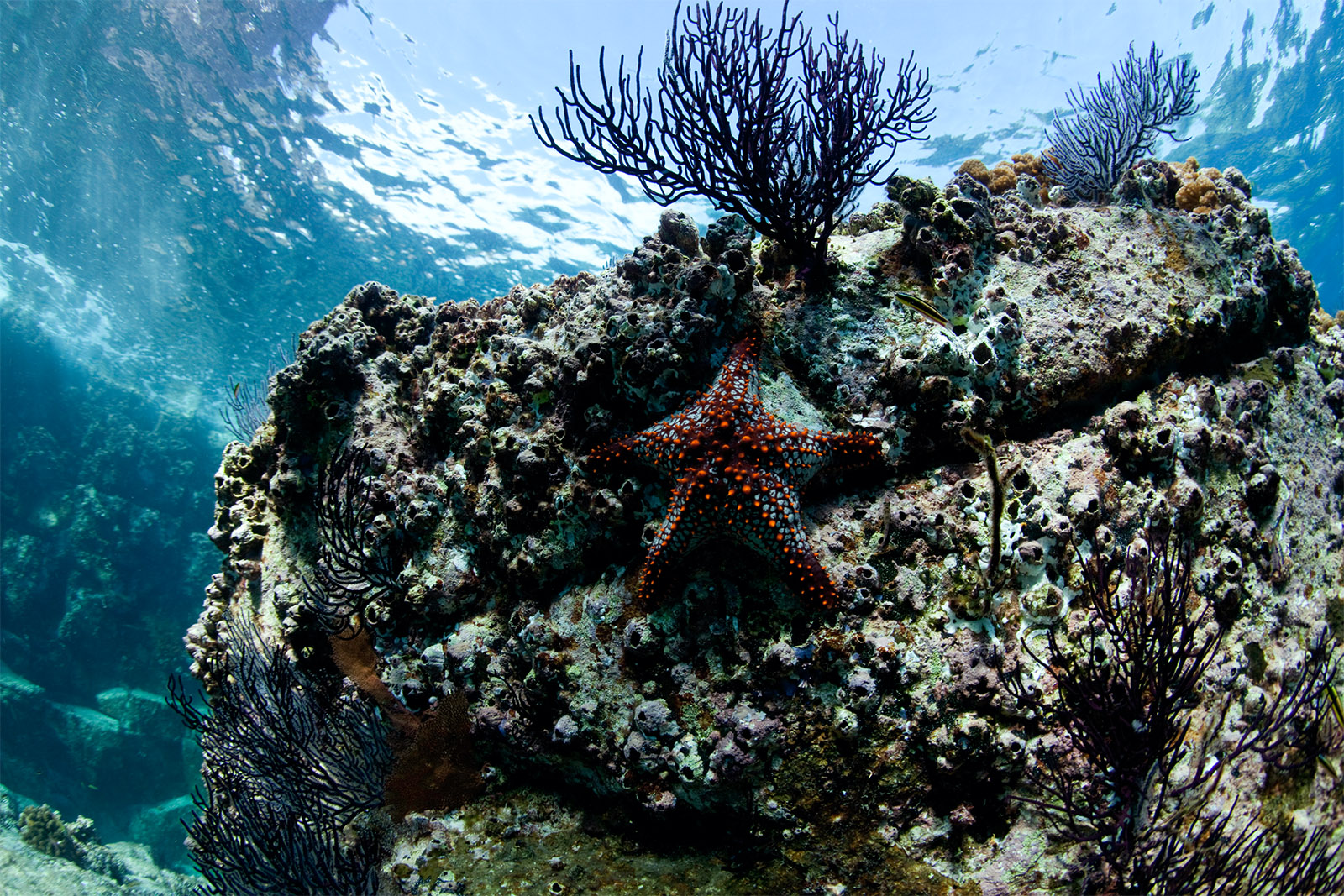
Honduras
Credit: Andy Casagrande / Ocean Image Bank
-

Stony Coral Tissue Loss Disease Detected in Honduras — Here’s What That Means
While the coronavirus pandemic spread around the world, a destructive disease was also wreaking havoc underwater on coral reefs: stony coral tissue loss disease. This fast-spreading disease, which can rapidly kill huge swaths of coral if left untreated, was recently discovered in coral reefs off the coasts of Roatán, Guanaja, and Utila, three Caribbean islands
-

With Healthy Fisheries, Everyone Wins
Santos Banegas has been fishing off the coast of Puerto Castilla, Honduras, for the last 35 years. At the start of his fishing career, he remembers routinely catching 300 to 500 pounds of fish a day, which meant he could easily feed and support his family. Today, he’s lucky if he catches 30 to 40
-

CORAL Creates First-Ever Fish Catalogs in Honduras
Lea esto en español When Coral Reef Alliance (CORAL) researchers first began working with fisheries on the North Coast of Honduras, they encountered an all-too-common dynamic: Local fishers held a wealth of knowledge of the various fish species of the region, but that information wasn’t documented anywhere. The local knowledge is passed down from generation
-

Cordelia Banks, a site that offers hope to the Mesoamerican Reef
This article is translated from the original article written in Spanish by MAR Fund. Written By Lucy Calderón, Communications Intern at MAR Fund, and Translated by Centro Oxford Popularly known as staghorn corals, due to the similarity of their structure with that of the antler of the mammal in question, the Acropora cervicornis corals are
-

Could Cleaner Water Mean Farewell for Coral Disease?
Lea esto en español When improperly treated sewage enters the marine environment, it can have devastating effects on a coral reef. Not only does it bring bacteria that can pose a threat to human health, but it also brings nutrients that fuel the growth of algae—a fierce competitor in the coral reef ecosystem. Algae compete
-

Want to Protect Fisheries? Involve the Community.
Lea esto en español During a recent interview, Dr. Antonella Rivera, CORAL’s Principal Investigator in Honduras, perfectly summed up our approach to conservation: “If we really want to make a difference with science, we have to involve the people who are most affected.” People and communities are always at the forefront of our work to
-

Making the Case for a Biological Corridor
In 2018, a law passed that opened up parts of the Honduran North Coast to commercial fishing—prior, only artisanal fishers were able to fish within certain areas. While some of the coastline lies within marine protected areas (MPAs), we suspected that fish populations along the coastline were all connected. If the MPAs weren’t somehow connected,
-

Aquaculture: An Alternative to Overfishing in Honduras
Lea esto en español Could aquaponics and aquaculture be a sustainable alternative to overfishing? According to Julio San Martin Chicas, our Principal Program Coordinator in Tela Bay, Honduras, the answer is yes: If specific fish can be adequately and competitively farmed using small-scale aquaculture, then we can alleviate fishing pressure on the reef. Aquaculture refers
-

Roatán Marine Park: A Year of Strength
Over the last 15 years, we’ve stood alongside the Roatán Marine Park (RMP) as they’ve grown into the model marine management organization that they are today. They set the standard for how a marine protected area should be managed, and we’ve been honored to partner with them to build capacity and ensure they have the